A day after the RBI raised the benchmark lending rate by 35 basis points, Kotak Mahindra Bank Managing Director Uday Kotak on Thursday said the central bank may go for one more rate hike to bring inflation below its upper tolerance level of 6 per cent. Yesterday, the RBI indicated that it wants inflation to be within the band first and then move towards the target of 4 per cent, Kotak said at the CII Global Economic Policy Summit 2022. "My sense is that there could be one more rate hike and that may be the time for thinking about a pivot, but we got to watch very closely the data, and maybe around 6.5 per cent as it looks today, subject to what happens to the world, subject to what happens to oil, subject to what happens to many other things," he said.

Listed housing finance companies (HFCs), as a group, posted a 3.7 per cent drop in second-quarter (Q2) profit year-on-year (YoY) to Rs 5,830 crore and 19 per cent sequentially on rise in interest expenses and uptick in provisions and write-offs. Operating income rose 13.7 per cent YoY to Rs 54,086 crore in Q2 of 2022-23 (FY23). Sequentially, income was up 62.3 per cent, from Rs 33,331 crore in the first quarter (Q1) of 2021-22 (FY22).

Instead of only focusing on the tenure for which the best interest rate is available, investors should also focus on their own investment horizon.

The finance ministry on Thursday raised concerns over the possible impact of El Nio conditions on India this year, saying if recent forecasts came true, the country could see lower agricultural output and higher inflation. "Some meteorological agencies predict the return of El Nio conditions in India this year. "If these predictions are accurate, then monsoon rains could be deficient, leading to lower agricultural output and higher prices," the ministry said in its monthly economic review.

The Securities and Exchange Board of India (Sebi) has just released a proposal to alter the regulations pertaining to the sponsor system for mutual funds. One of the reasons for the proposed changes is that there are two conflicting regulations that need to be clarified. The other reason is that the sponsor system may itself be outdated as it stands, and the proposed changes would allow new entities such as private equity funds and portfolio management services to enter this space.
Former RBI governor Raghuram Rajan on Monday said the central bank will have to raise interest rates to tame inflation and the hikes need not be considered by politicians and bureaucrats as some "anti-national" activity. Known for his frank views, Rajan also said it was important to remember that the "war against inflation" is never over. "Inflation is up in India. At some point, the RBI will have to raise rates, like the rest of the world is doing," he said in a LinkedIn post.
The bank also announced that it will reduce its external benchmark linked lending rate as well as repo linked lending rate by 40 basis points from July 1.

Equity benchmarks extended their decline for the fourth straight session on Wednesday, with the Sensex falling 214.85 points after the Reserve Bank raised the key interest rate by 50 basis points. Continuous foreign fund outflows and surging crude oil prices also weighed on markets. The 30-share BSE benchmark dropped 214.85 points or 0.39 per cent to settle at 54,892.49.

Finance minister Nirmala Sitharaman on Wednesday exuded confidence that inflation would further decline and the government is on track to meet its budgetary target for deficit and said that there is no fear of stagflation in India. Replying to the debate on first batch of Supplementary Demands for Grants 2022-23 in Lok Sabha, the finance minister said inflation has come down and it is now in the tolerable band of the RBI. Inflation has been declining since April 2022 and it is declining further, she said.

Automobile retail sales in India clocked best-ever performance last month aided by robust registrations across segments including passenger vehicles, two-wheelers and commercial vehicles, automobile dealer' body FADA said on Friday. The overall automobile retail sales rose by 26 per cent to 23,80,465 units last month, as compared with 18,93,647 units in November 2021. "November 2022 has clocked highest retails in the history of Indian automobile Industry with March'20 as an exception when retails were higher due to BS IV to BS VI transition," Federation of Automobile Dealers Associations (FADA) president Manish Raj Singhania said in a statement.

Reliance Industries was the top gainer in the Sensex pack, rallying nearly 4 per cent, followed by Infosys, Tech Mahindra, HCL Tech, TCS and L&T.

Passenger vehicle dispatches to dealers in India rose over two-fold last month on a low base of Covid-19-hit May last year. As per the Society of Indian Automobile Manufacturers (SIAM), passenger vehicle wholesales rose to 2,51,052 units last month as compared to 88,045 units in May 2021. The two-wheeler sales rose to 12,53,187 units in May as compared to 354,824 units in the year-ago period.

'The rising cost of construction, the cost of doing business, high compliance, and inflation/interest rates going up have already reduced returns to single digits.'

'The actions of Indian monetary authorities will depend on how quickly they want the inflation to come down to 4 per cent.'
Following are the highlights of the RBI's first monetary policy statement of 2022-23 unveiled by Governor Shaktikanta Das: Policy repo rate unchanged at 4%; marginal standing facility rate & bank rate too remain unchanged at 4.25%. Monetary stance to be accommodative with focus on withdrawal of accommodation to keep inflation within target. GDP growth projection for FY'23 slashed to 7.2% from 7.8%; growth projections based on assumption of crude oil (Indian basket) price at $100 a barrel during FY'23. Inflation forecast hiked to 5.7% for FY'23 from 4.5%.

Indian GDP will grow at 8.5 per cent in 2021-22, and the rate will accelerate further to 9.8 per cent in 2022-23, a foreign brokerage said on Tuesday. The GDP had contracted by 7.3 per cent in the pandemic-hit FY21, and is widely expected to grow at a faster pace due to the base effect in 2021-22. The Reserve Bank of India (RBI) expects a 9.5 per cent growth in 2021-22, and the same to slow down to 7.8 per cent as things normalise.

The passenger vehicle dispatches to dealers increased by 11 per cent in July as improvement in semiconductor supplies helped the companies to ramp up production ahead of the festive season, auto dealers' body SIAM said on Friday. Overall passenger vehicle wholesales increased to 293,865 units last month compared to 264,442 units in July 2021. Passenger car dispatches rose 10 per cent to 143,522 units in July from 130,080 units in the year-ago period.

For now, the concerns over bad loans have taken a back seat; a bigger challenge for the banking community is credit growth, explains Tamal Bandyopadhyay.
ICICI Bank, the second-largest private sector lender and state-owned Indian Bank on Monday raised their lending rates across all tenors in anticipation of a rate hike by the RBI later this week. The rates have been increased across all tenors under the marginal cost of funds-based lending rate (MCLR) system, a move that will make EMIs expensive for those who availed loans benchmarked against the MCLR. Under the revised rates, effective August 1, ICICI Bank's one-year MCLR has increased by 15 basis points or 0.15 per cent to 7.90 per cent, while the overnight MCLR rose to 7.65 per cent, as per information posted on the bank's website.


The Reserve Bank's rate setting panel on Thursday met to finalise a report for the government on why it failed to keep retail inflation below the target of 6 per cent for three consecutive quarters since January this year, said sources. The report will be presented to the government as per the Reserve Bank of India Act, they added. The six-member Monetary Policy Committee (MPC) is headed by Governor Shaktikanta Das.

Despite rising interest rates, leading home loan players SBI and HDFC have announced discounted interest rates beginning at 8.40 per cent as part of their festive offerings. SBI in a statement said that its home loan book has topped the Rs 6 lakh crore mark, a first in the industry. The leading lender said it is offering up to 25 bps discount on interest rate to new home loan borrowers, making the entry level rate at 8.40 per cent and the offer will run up to January 31, 2023.

An NCD's credit rating will tell you whether risk possibility is high or low. Instruments rated below AA are regarded as high-risk.
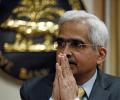
Reserve Bank Governor Shaktikanta Das on Friday said the rupee is holding up relatively well when compared to the currencies of emerging market peers and advanced economies. Days after the domestic currency breached the 80-level against the dollar, Das said Reserve Bank of India (RBI) has zero tolerance for volatile and bumpy movement in the rupee and added that the central bank actions have helped in smoother movement. He said RBI has been supplying US dollars to the market to ensure adequate supply of liquidity and also clarified that the central bank does not target a particular level for the currency.

This year's edition, three years lost to the pandemic and scheduling, wore a distinctive shade of green, and, as would befit an era of technology shift from internal combustion engines to electric motors, had a clutch of high-technology exhibits and concepts. But the excitement of the expo's heyday was missing.
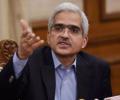
After hiking the repo rate by 0.50 per cent, RBI Governor Shaktikanta Das on Wednesday said future policy actions by the central bank will be guided by the evolving conditions. Addressing a press conference, the governor said the RBI has changed the policy stance to drop the phrase "remains accommodative", and instead opted for "withdrawal of accommodation" for guiding its future moves. The central bank did not hike the cash reserve ratio contrary to speculation, he said, adding that the liquidity withdrawal will be calibrated and measured.
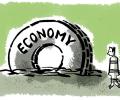
'Once the lockdown is lifted, we will see some pickup in demand.' 'And my sense is that it will be a long walk this time given that we have lost three months of economic activity.'
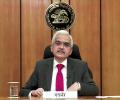
'There are some high-frequency indicators where uptick is visible and some where it is not'

Lead indicators suggest that domestic current account deficit (CAD) is likely to reduce in 2023, while macro-economic stability has received a boost from inflation being brought back to the official tolerance band, according to the Reserve Bank of India's (RBI's) January 2023 Bulletin. "With the merchandise trade deficit reaching an all-time high of $83.5 billion in a quarter, and a rise in net outgo from the income account, the current account deficit increased to 4.4 per cent of GDP in Q2FY23," the State of the Economy article in the bulletin said. "It is noteworthy, however, that the CAD for Q1 was revised down from 2.8 per cent to 2.2 per cent on account of downward adjustment in Customs data.

The domestic stock market may face volatility amid the monthly derivatives expiry scheduled this week, while investors would mainly await the outcome of RBI's interest rate decision on Friday, said analysts. Global market movement would also continue to drive sentiment amid a bearish trend recently following rate hikes by the US Federal Reserve and other central banks. The Reserve Bank of India (RBI) may take cues from its global counterparts to raise interest rate for the fourth time in a row to control inflation.

Concerned over inflationary pressures in the economy, the Reserve Bank of India (RBI) is bringing down surplus liquidity in the system rapidly. It has fallen to pre-Covid levels and almost 2 per cent of banks' net demand and time liabilities (NDTL). NDTL shows the difference between the sum of demand and time liabilities (deposits) of a bank (with the public or the other bank) and the deposits in the form of assets held by the other bank.

The recent run on the US-based Silicon Valley Bank (SVB) and the subsequent seizure of its assets by the regulators may have sparked a global wave of risk aversion, particularly for start-ups. However, the Indian banking sector is unlikely to be a victim of any contagion effects, said analysts. he bank, which played a big role in financing start-ups and technology players, faced stress after incurring huge losses on its holdings of US bonds, following the most-aggressive monetary tightening cycle by the Federal Reserve in around four decades.

The Reserve Bank on Wednesday hiked key benchmark policy rate by 25 basis points to 6.5 per cent, citing sticky core inflation. This is the sixth time interest rate has been hiked by the Reserve Bank of India (RBI) since May last year, taking the total quantum of hike to 250 basis points. Announcing the bi-monthly monetary policy, RBI Governor Shaktikanta Das said the Monetary Policy Committee (MPC) by a majority decided to raise the policy repo rate by 25 basis points and keep a 'strong vigil' on inflation outlook.
Uncertainty is emerging as the only certainty, said RBI Governor Shaktikanta Das as he emphasised on continued policy support at the December MPC meet during which members expressed concerns over spread of the Omicron variant of coronavirus, as per the minutes of the rate-setting panel released on Wednesday. After three days of deliberations, the six members of the Monetary Policy Committee (MPC) on December 8 unanimously voted for status quo on policy rates for the ninth consecutive time. At the meeting, the RBI Governor said risks stalking the global economy have amplified with rapid spread of the virus mutations, including the Omicron variant, leading to countries scrambling for restrictions.

The government on Thursday kept interest rates unchanged on small savings schemes, including NSC and PPF, for the second quarter of 2022-23 amid high inflation and rising interest rate. The interest rate on small savings schemes has not been revised since the first quarter of 2020-21. Public Provident Fund (PPF) and National Savings Certificate (NSC) will continue to have an annual interest rate of 7.1 per cent and 6.8 per cent, respectively, in the second quarter of this fiscal.

Inflation to peak in the current quarter within tolerance band, moderating in the second half of next fiscal, says central bank.

The government on Monday ruled out making public the RBI report detailing the reasons why the central bank could not keep inflation within the targeted 6 per cent upper limit for the three consecutive quarters. "Yes sir, RBI has furnished a report to the central government, as mandated under Section 45ZN of the RBI Act, 1934 and Regulation 7 of RBI Monetary Policy Committee and Monetary Policy process Regulations, 2016," minister of state for finance Pankaj Chaudhary said in a written reply. The said provisions of the RBI Act, 1934, and regulations therein does not provide for making the report public, he said.

Avoid discontinuing your SIPs. Persist for at least 7-10 years.
RBI kas hiked short-term lending (repo) rate by 0.25 per cent to 7.5 per cent.

The disruptions caused by COVID-19 have more severely impacted small and mid-sized corporates, including NBFCs and MFIs, in terms of access to liquidity.
